Halal Certification in Pakistan
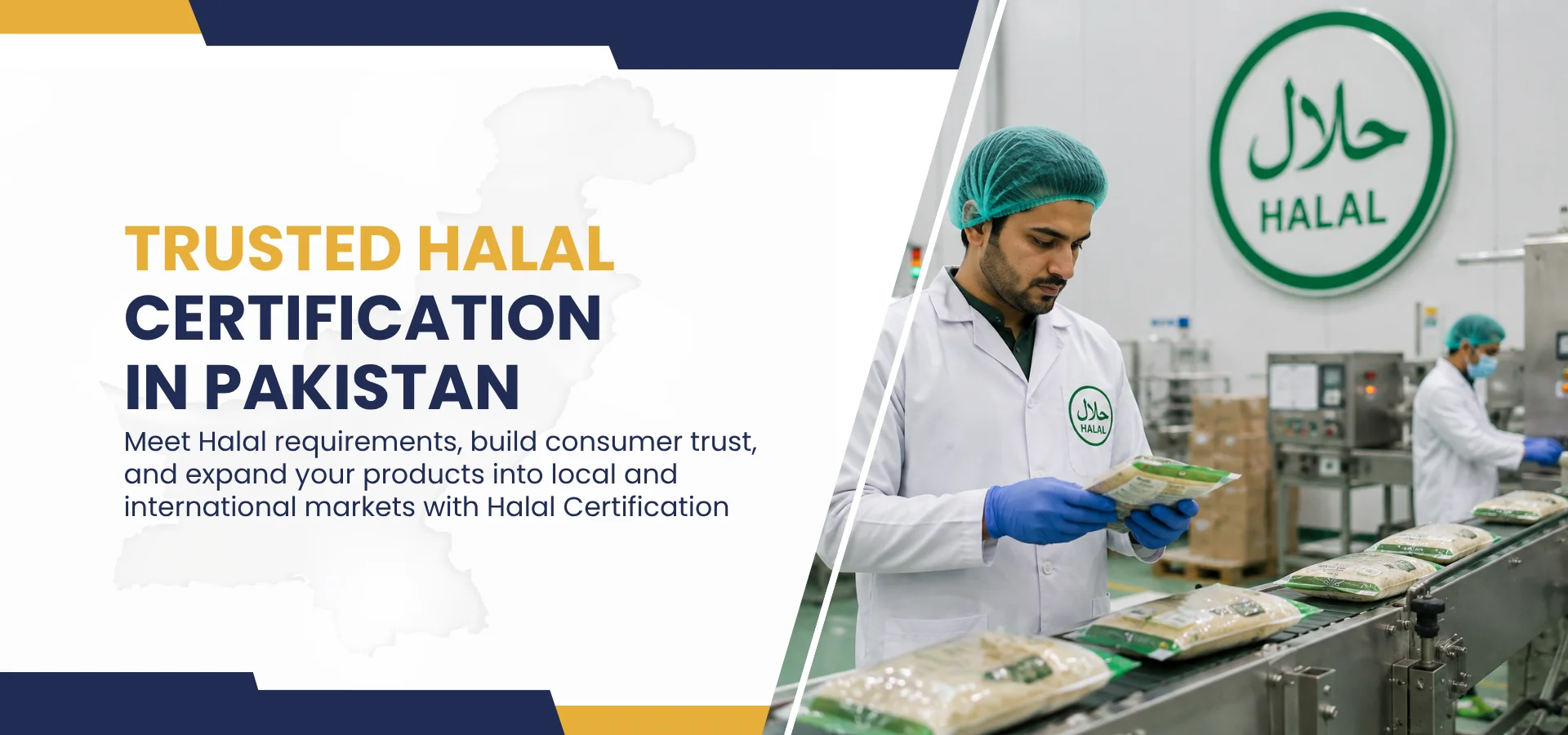
Halal certification in Pakistan is essential for food manufacturers, exporters, and businesses that want to ensure compliance with Islamic dietary laws and access high-value global Halal markets.
At GMC, we have helped food processors, meat exporters, dairy companies, and packaged food manufacturers across Pakistan achieve internationally recognized Halal compliance. From Karachi’s export industry to Punjab’s food sector, we provide complete Halal certification support through a structured, practical, and audit-ready approach.
What is Halal Certification?
Halal certification is an official confirmation that products and processes comply with Islamic dietary laws (Sharia principles). It ensures that all ingredients, production methods, equipment, and handling practices are free from non-Halal elements and contamination.
It verifies that food and related products are permissible, safe, and trusted by Muslim consumers worldwide.
Beyond compliance, Halal certification is your entry point into international Muslim markets and a signal of trust to global buyers.
Why Halal Certification Matters for Pakistani Businesses
Halal certification plays a critical role in Pakistan's export economy, especially in the food and agriculture sector. Global buyers, particularly in the Middle East, Southeast Asia, and Europe, require strict Halal assurance before approving suppliers.
Access to Global Trade
Without certification, businesses often lose access to major retail chains, distributors, and international procurement contracts.
Regulated by Pakistan Halal Authority
Halal certification in Pakistan is supported and regulated, ensuring standardized compliance across industries.
Strengthens Consumer Trust
For domestic businesses, it strengthens consumer trust in a market where Halal integrity matters deeply.
Who Needs Halal Certification in Pakistan?
Halal certification is required across multiple sectors — anywhere your product is consumed or used by Muslim consumers.
Meat & Poultry Processing
Companies in Karachi, Lahore, and Faisalabad supplying Gulf and international markets.
Dairy & Beverage Manufacturers
Ensuring ingredient-level compliance throughout production.
Food Processing & Packaged Goods
Companies producing snacks, frozen foods, and bakery items.
Slaughterhouses & Meat Exporters
Supplying international retail and foodservice chains.
Restaurants, Hotels & Catering
Serving verified Halal food to consumers.
Cosmetics & Pharmaceutical Companies
Ensuring ingredient compliance for Muslim consumers.
Benefits of Halal Certification in Pakistan
Access to Global Halal Markets
Enables entry into high-demand regions like UAE, Saudi Arabia, Malaysia, and Indonesia — a mandatory requirement for many international buyers.
Increased Consumer Trust
Muslim consumers prefer certified products with verified Halal integrity.
Regulatory & Buyer Compliance
Meets requirements of international food authorities, Pakistan Halal Authority, and global supply chains.
Enhanced Brand Reputation
Positions your business as ethical, compliant, and globally competitive.
Better Supply Chain Transparency
Improves traceability of ingredients, sourcing, and production processes.
Pharma & Cosmetics Compliance
Ensures ingredient and process compliance for non-food Halal categories increasingly demanded by Muslim consumers globally.
Competitive Market Advantage
Helps your business stand out in both domestic and export markets.
Business Expansion Opportunities
Enables partnerships with global retailers and international distribution networks.
Halal Certification Process at GMC
At GMC, we follow a structured and practical implementation approach.
Initial Assessment & Gap Analysis
We evaluate your current processes, ingredients, and systems for Halal compliance gaps.
Documentation Development
We prepare Halal manuals, procedures, and compliance documentation.
System Implementation
We help implement Halal controls across sourcing, production, and handling processes.
Staff Training
We train your team on Halal requirements, hygiene, and compliance practices.
Audit Preparation
We prepare your organization for certification audits and ensure full readiness.
Certification & Ongoing Support
We support you through certification and continued compliance maintenance.
How Long Does Halal Certification Take in Pakistan?
For small to medium food businesses, Halal certification typically takes 4 to 8 weeks.
For larger manufacturers and exporters with complex supply chains, it may take 8 to 12 weeks.
At GMC, we ensure a smooth and efficient process that does not interrupt your production or business operations.
Halal Certification Cost in Pakistan
The cost of Halal certification in Pakistan varies based on:
- Type of products and industry
- Size of the organization
- Production complexity
- Export requirements and target markets
- Existing compliance systems
GMC provides a customized quotation after a detailed assessment, ensuring transparency and fairness for every business.