
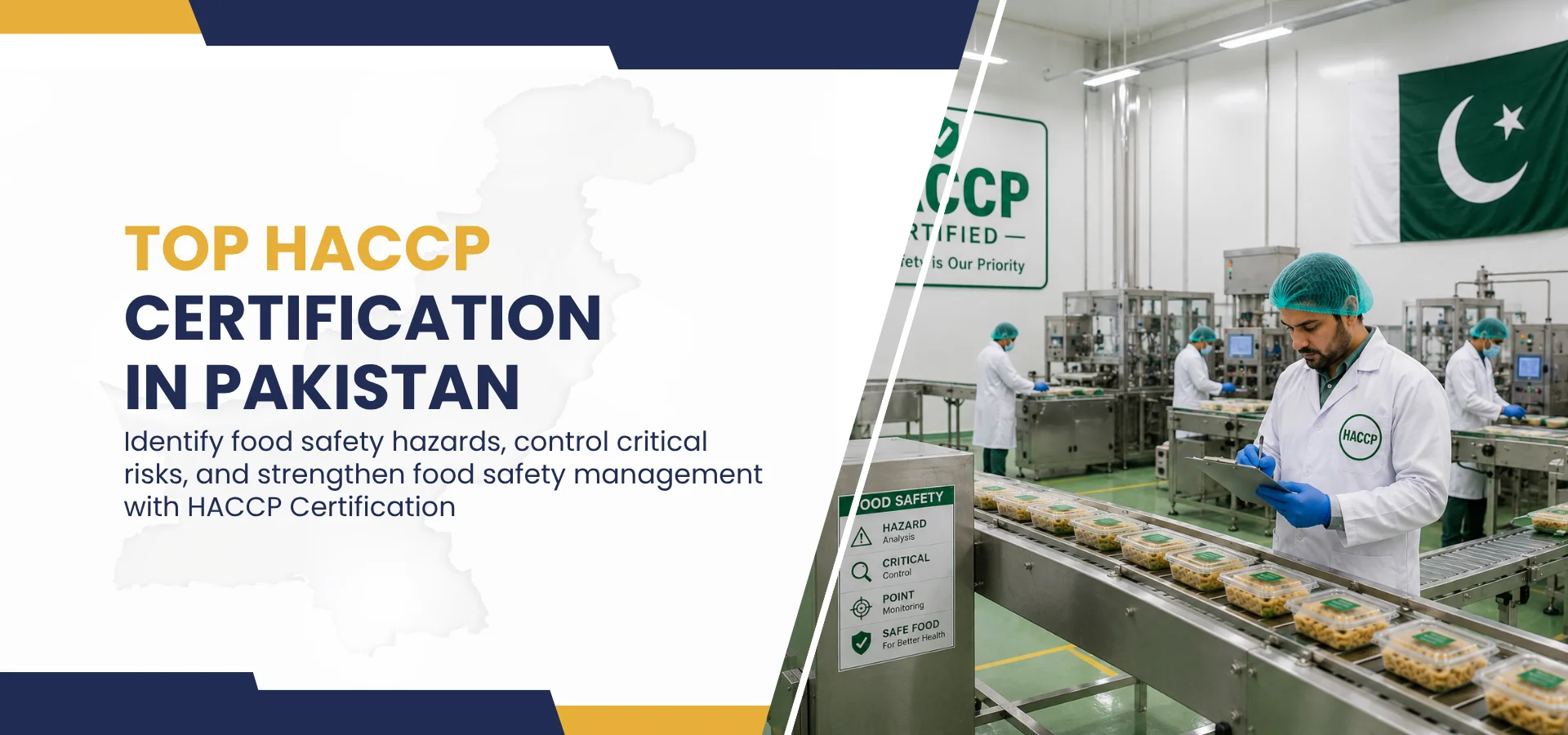
HACCP Certification in Pakistan
HACCP certification in Pakistan is essential for food manufacturers, processors, exporters, and hospitality businesses that want to ensure food safety, meet international standards, and access global markets.
At GMC, we have supported food businesses across Pakistan that includes meat processors in Karachi to dairy and packaged food manufacturers in Punjab, helping them achieve internationally recognized food safety compliance and export readiness. With over 25 years of experience, we help organizations implement HACCP-based food safety systems that are practical, compliant, and audit-ready.
What is HACCP?
HACCP (Hazard Analysis and Critical Control Points) is a globally recognized food safety management system that identifies, evaluates, and controls hazards in food production processes. It focuses on preventing food safety risks rather than detecting them after they occur. These hazards may include biological, chemical, or physical contamination at any stage of production.
For Pakistani food businesses, HACCP is the foundation of safe food production and is often a mandatory requirement for exports, retail supply chains, and regulatory approvals. Whether you operate a food factory in Faisalabad, a bakery in Lahore, or a seafood processing unit in Karachi, HACCP ensures your products are safe, consistent, and globally acceptable.
Why HACCP Certification Matters in Pakistan
Food safety is becoming increasingly critical in both local and international markets. Buyers, regulators, and consumers now expect verified safety systems before approving food suppliers.
Minimum Requirement for Export
Often the minimum requirement to enter markets in Europe, the Middle East, and North America — without it, many businesses cannot qualify for supplier registration.
Recognized & Integrated Locally
Widely recognized by food authorities in Pakistan and often integrated with ISO 22000 and global retail requirements.
Verified Safety Systems
Gives buyers, regulators, and consumers the assurance of a verified, controlled food safety system.
Who Needs HACCP Certification in Pakistan?
HACCP is essential for all businesses involved in food production, processing, and handling.
Food Manufacturing Companies
Producing packaged and processed foods in Lahore, Faisalabad, and Gujranwala.
Meat & Poultry Processors
Handling raw and processed meat products in Karachi and Punjab.
Dairy & Beverage Companies
Ensuring hygiene and contamination control during production.
Bakeries, Confectionery & Snacks
Manufacturers supplying local and export markets.
Seafood Processing & Export
Units operating in coastal regions.
Restaurants, Hotels & Catering
Businesses serving large-scale food operations.
Food Packaging & Logistics
Companies managing temperature-sensitive products across storage and transport.
Benefits of HACCP Certification
Strong Food Safety Control System
Identifies risks early and prevents contamination throughout the production process.
Compliance with International Standards
Meets requirements for ISO 22000, FSSC 22000, and international export regulations.
Access to Export Markets
Required by many international buyers and retail chains before supplier approval.
Reduced Risk of Contamination
Prevents biological, chemical, and physical hazards in food production.
Improved Customer Confidence
Builds trust with consumers, distributors, and international buyers.
Better Process Control
Ensures monitoring and control at every critical stage of production.
Strong Regulatory Compliance
Helps meet requirements of food safety authorities in Pakistan and abroad.
Enhanced Brand Reputation
Positions your business as a reliable and safety-focused food producer.
HACCP Certification Process at GMC
At GMC, we follow a practical and industry-focused approach designed for Pakistani food businesses.
Food Safety Gap Analysis
We assess your current operations and identify risks and compliance gaps.
HACCP Plan Development
We design a customized HACCP system including hazard analysis and critical control points.
Documentation Preparation
We develop food safety manuals, procedures, and monitoring records.
Implementation Support
We help implement hygiene controls, monitoring systems, and corrective actions.
Staff Training
We train your team on HACCP principles and food safety practices.
Audit Prep & Certification Support
We prepare your organization for successful certification audits.
Post-Certification & Ongoing Support
We provide continued support for surveillance audits and system maintenance.
How Long Does HACCP Certification Take in Pakistan?
The timeline depends on the size and complexity of your food operations.
For small and medium food businesses, HACCP certification typically takes 3 to 6 weeks.
For larger manufacturing or export-focused facilities, it may take 6 to 10 weeks, depending on system readiness and operational complexity.
At GMC, we ensure a smooth and efficient implementation process without disrupting your production activities.
HACCP Certification Cost in Pakistan
The cost of HACCP certification in Pakistan depends on several factors:
- Type of food products being handled
- Size of the organization
- Number of production lines or facilities
- Existing food safety systems
- Export requirements and compliance scope
We don’t use fixed pricing because every food business has different risks and operational needs. Instead, GMC provides a customized quotation after a detailed assessment, ensuring fair and transparent pricing.